
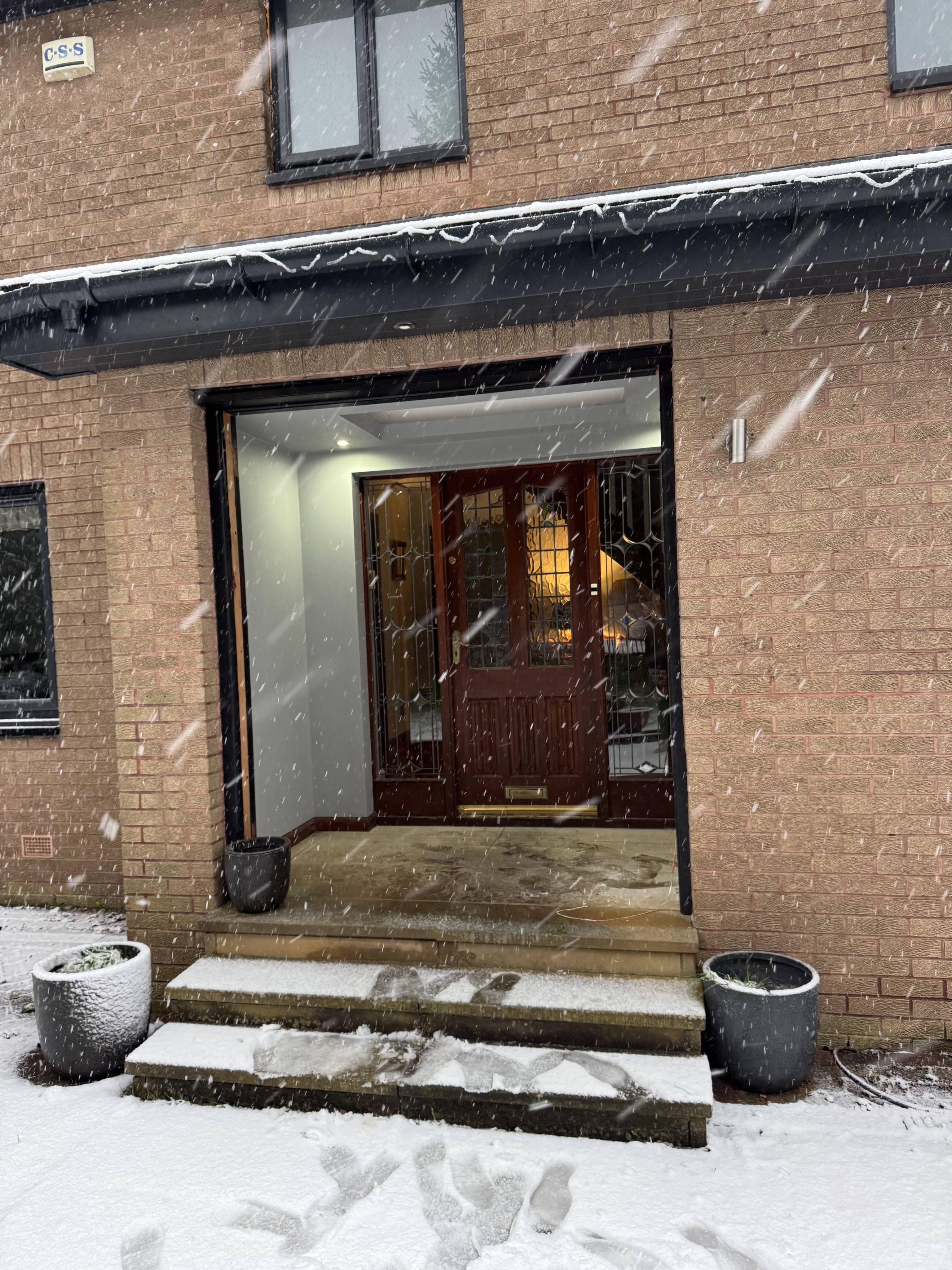
Can Windows and Doors Be Installed in Winter? Everything You Need to Know
It’s one of the most common reasons people delay: “I’ll wait until the weather improves.” It’s understandable. The idea of having your windows or doors removed in the middle of a Scottish November doesn’t immediately sound appealing. But the reality of modern window and door installation is quite different from what most people imagine — and waiting until spring often costs more than it saves.
Yes, Windows and Doors Can Be Installed in Winter
Modern uPVC and composite installations are designed to be carried out year-round. The materials themselves are unaffected by cold temperatures — uPVC doesn’t become brittle or difficult to work with in winter conditions, and composite doors are manufactured to tight tolerances that don’t change with the weather.
Professional installers work with these conditions every day. A typical window or door replacement takes a matter of hours per opening. The gap between removing the old frame and sealing in the new one is measured in minutes, not hours. The brief period of exposure to the outside air is uncomfortable, but it’s manageable — and a good installation team will work methodically to minimise disruption and draught.
What About the Sealant and Fixings?
This is the question most people don’t think to ask. The sealants and expanding foams used to weather-seal window and door installations do have temperature requirements — most require conditions above approximately 5°C to cure correctly. Professional installers are aware of this and will use products rated for lower temperatures when necessary, or will time the work around suitable conditions. It’s worth asking any company you’re considering whether they use cold-weather rated products during winter installations.
The Heating Bill Argument
Here’s the practical reality: if your windows or doors are failing right now, they are costing you money every single day this winter. A failed sealed unit, a draughty frame or a composite door that no longer seals properly lets heat out constantly — and with energy costs where they are, that’s not a small amount. Every week you delay a replacement that’s genuinely needed is a week of heating bills that are higher than they need to be.
A new A-rated window or a well-fitted composite door will begin saving energy from the first day it’s installed. The payback on that starts immediately, not in spring.
Winter Availability Is Actually Better
Spring and summer are the busiest periods for window and door installers across Scotland. Lead times from survey to installation stretch out as demand peaks. In winter, availability is typically much better — you can often get a survey booked within days and installation scheduled within two to three weeks. If you want the work done quickly and at a time that suits you, winter is frequently the easiest time to arrange it.
What to Expect on Installation Day
A good installation team will protect your flooring and furniture before work begins. They’ll work one opening at a time, completing each window or door fully — including internal and external sealing — before moving to the next. At no point should your home be left open or unsecured. The job should be finished and fully weathertight before the team leaves.
If you have young children, elderly relatives or anyone who feels the cold particularly, let the team know in advance. A good company will work around your household and minimise disruption as much as possible.
Don’t Wait for Spring
If your windows or doors need replacing, the best time to do it is as soon as you can arrange it — not in six months when every other homeowner in central Scotland has the same idea and lead times have doubled.
Elite Group Scotland carry out installations year-round across Falkirk, Stirling, Edinburgh, Livingston, Dunfermline, Alloa and all of central Scotland. Free home surveys, no obligation, no pressure. FENSA approved (Reg. 45056), own trained fitters, 10-year insurance-backed guarantee. Call 01324 312443 or visit elitegroupscot.co.uk to book your survey.