
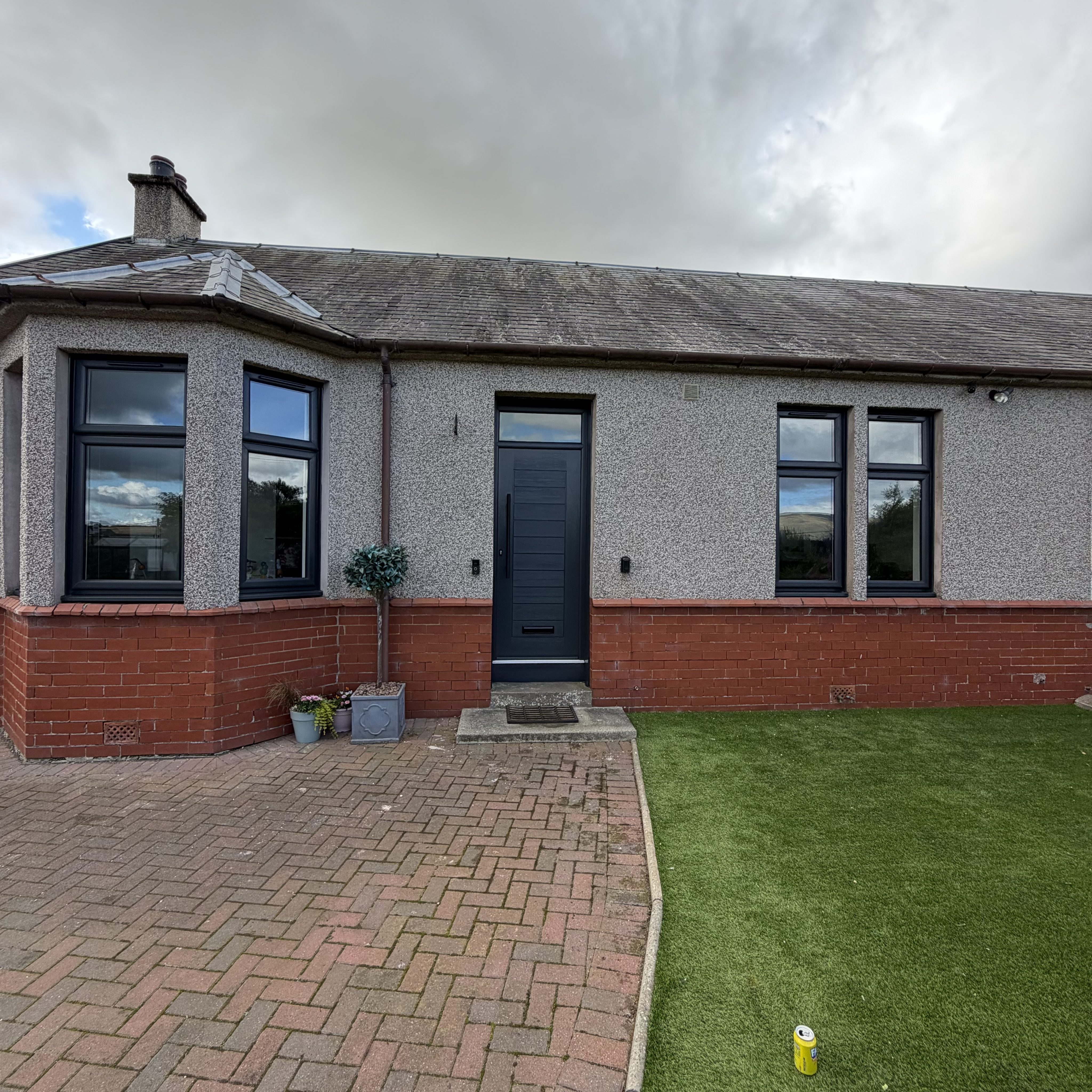
How New Windows and Doors Can Make Your Home More Secure This Winter
The clocks go back at the end of October. From that point, darkness falls early and the darker winter months bring a well-documented rise in opportunistic break-ins across Scotland. It's an uncomfortable fact, but it's worth thinking about honestly — and it's one of the strongest reasons to consider upgrading older windows and doors before winter really takes hold.
The Problem With Older Windows and Doors
Window and door security technology has changed significantly over the past 15 to 20 years. If your windows or doors were installed before roughly 2010, the locking mechanisms, glazing and frame reinforcement may be well below what's now considered standard. Older single-cylinder locks, basic two-point catches and non-laminated glass offer far less resistance than modern equivalents.
Experienced burglars don't spend time with older windows — they simply lever or snap the lock. It can take less than 30 seconds. Modern multipoint locking systems, toughened or laminated glass and reinforced frames change that equation significantly. There's no such thing as a completely burglar-proof home, but the goal is to make entry difficult enough that an opportunist moves on.
What Modern Composite Doors Offer
A good quality composite door is one of the single best upgrades you can make for home security. The solid core — typically 48mm of laminated timber or foam — makes the door enormously difficult to kick in or flex. The multipoint locking system engages at three, five or seven points around the frame when you lift the handle, rather than just at a single central latch.
The glass panels fitted to composite doors use toughened or laminated safety glass as standard, which is far harder to break quietly than standard glazing. Solidor, one of the ranges we install, achieves PAS 24 security accreditation — a recognised British Standard that tests resistance to physical attack. Many insurance companies look favourably on PAS 24 certified doors when calculating premiums.
What to Look for in Windows
On windows, the key security features are the locking hardware and the glazing. Modern uPVC windows come with multipoint espagnolette locks as standard — a single handle operation that engages locks at multiple points around the sash. Older windows may have only a basic cockspur catch, which offers minimal resistance.
Shoot bolt locks, hinge protectors and restrictors add additional layers of security. If you have children in the home, window restrictors also prevent windows from opening wide enough to pose a fall risk — a dual benefit that's worth having regardless of security concerns.
Glazing matters too. Toughened glass shatters into small blunt pieces rather than large dangerous shards. Laminated glass holds together even when broken, making it much harder to create a usable opening quickly. Both are significant upgrades over standard annealed glass fitted in older windows.
Don't Overlook the Frame
A strong lock fitted to a weak frame achieves very little. Modern uPVC frames are internally reinforced with galvanised steel, making them rigid and resistant to levering. The quality of the reinforcement varies between manufacturers — which is one reason it pays to use a reputable supplier and installer rather than chasing the cheapest quote available.
The quality of the installation matters just as much as the quality of the product. A door that isn't fitted square in a solid frame, or a window that isn't correctly anchored to the masonry, will never perform as it should regardless of what it says on the specification sheet.
Insurance Implications
Many home insurance policies include requirements around the type of locks fitted on external doors and accessible windows. If your locks don't meet the insurer's specification — typically a British Standard five-lever mortice lock on timber doors, or multipoint locking on uPVC and composite — you may find a claim is reduced or refused following a break-in. It's worth checking your policy documents and speaking to your insurer if you're unsure.
Fitting FENSA-certified, security-rated windows and doors and keeping the certificate can also work in your favour when renewing a policy or making a claim.
Get Sorted Before the Dark Nights Arrive
October is the right time to act. Lead times on new windows and doors are typically two to four weeks from survey to installation, which means booking now gets the work done before the worst of the winter weather arrives and before the evenings become a problem.
Elite Group Scotland offer free no-obligation surveys across Falkirk, Stirling, Edinburgh, Livingston, Dunfermline, Alloa and all of central Scotland. We're FENSA approved (Reg. 45056), use our own trained fitters and back every installation with a 10-year insurance-backed guarantee. Call us on 01324 312443 or visit elitegroupscot.co.uk to book your free survey.